Walking Through Gyeongju Drama Filming Spots
When I boarded the early morning KTX train from Seoul to Shin-Gyeongju Station last autumn, a low fog hovered over the ancient Silla burial mounds like a scene plucked straight out of a Korean period drama. Gyeongju was the capital of the Silla Kingdom for nearly a thousand years, making it an open-air museum where history isn’t just displayed behind glass—it lives in every cobblestone lane, earthen mound, and wooden pavilion.
For fans of sageuk (Korean historical dramas), Gyeongju is holy ground. Production crews repeatedly travel to this historic city because no set builder can truly replicate the grandeur of authentic Silla and Joseon architecture against backdrop mountains. Shows like The King’s Affection, Mr. Sunshine, Hwarang, and Bloody Heart have used gyeongju drama filming spots to create some of the most memorable emotional scenes in K-drama history. Here is how you can step directly into those frames on your next journey through South Korea.
1. Woljeonggyo Bridge (월정교)
In The King’s Affection, this magnificent covered wooden bridge serves as the backdrop for quiet late-night conversations between Crown Prince Lee Hwi and her royal tutor Ji-un. The grand architecture and reflected lights on the water heighten the tension and hidden longing between the main characters.
In reality, Woljeonggyo Bridge is a meticulously reconstructed covered bridge spanning the Muncheon Stream. Originally built during the Silla Kingdom in 760 AD under King Gyeongdeok, the bridge burned down during the Joseon era and was painstakingly restored between 2008 and 2018 using historic archaeological research. Today, it stands as one of the largest wooden structures in South Korea, boasting a double-story pavilion that looks majestic during the day and ethereal at night.
How to get there
From Shin-Gyeongju KTX Station, take Bus 50, 51, or 70 to the Gyeongju Intercity Bus Terminal stop. From the terminal area, transfer to Bus 60 or 61 and get off at the Woljeonggyo Bridge stop. Alternatively, if you are starting from the popular Hwangridan-gil shopping area, it is a pleasant 15-minute walk south through traditional residential alleyways.
✈️ Book your trip to Korea — hotels, flights & more
2. Yangdong Folk Village (양동마을)
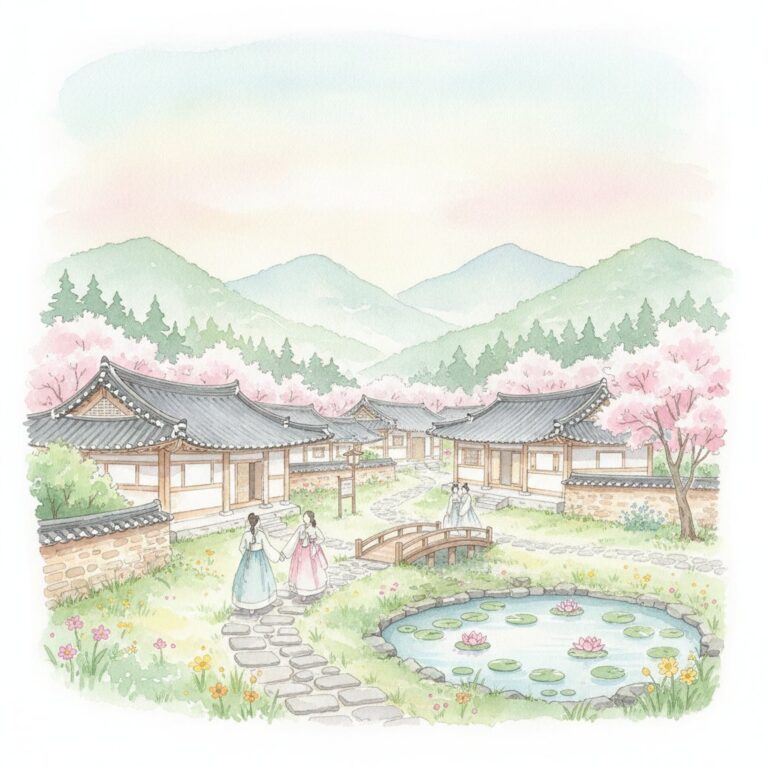
In Mr. Sunshine, the atmospheric Joseon-era nobility residences were used to film intimate moments involving Go Ae-shin’s noble family home. The stone walls and centuries-old tile-roofed mansions give the impression that time stopped over a hundred years ago.
Yangdong Folk Village is a UNESCO World Heritage Site nestled in northern Gyeongju. Founded in the 15th century, it is Korea’s largest clan village, preserves authentic Joseon architecture, and remains an active community where real families live today. The village is split by gentle hills into distinct upper and lower sections; historic tile-roofed hanoks belonging to the noble Yangban class sit high on the ridge, while thatched-roof houses built for commoners settle gracefully in the valley below.
How to get there
From the Gyeongju Intercity Bus Terminal or Gyeongju Station area, take Bus 200, 203, or 205 heading north. Get off at the Yangdong Village Entrance (양동마을 입구) stop. The ride takes approximately 35 to 40 minutes. Because this is a real living residential village, visitors should stay on public footpaths and keep noise levels low out of respect for local residents.
3. Donggung Palace and Wolji Pond (동궁과 월지)
If you felt enchanted by royal banquets and moonlight strolls in Silla-era series like Queen Seondeok or Hwarang, this location will feel instantly familiar. The reflection of intricate wooden pavilions glistening across the still waters creates the quintessential backdrop for palace court intrigue and tragic romantic confessions.
Donggung Palace was built in 674 AD during the reign of Silla King Munmu as a secondary palace complex. It hosted grand feasts, seasonal celebrations, and receptions for foreign envoys. Wolji Pond (formerly known as Anapji) was constructed with artificial islands and curved coastlines designed so that no matter where you stand along the perimeter, you cannot see the entire pond in one glance. This gave royal guests the illusion of staring out into a vast ocean.
How to get there
Take Bus 10, 11, or 600 from the Gyeongju Bus Terminal direct to the Donggung Palace and Wolji Pond stop (under 12 minutes). You can also walk east from Cheomseongdae Observatory across the historical park grounds in about 10 minutes.
🎟️ Popular tours & experiences in Korea
Klook.com4. Daereungwon Tomb Complex (대릉원)
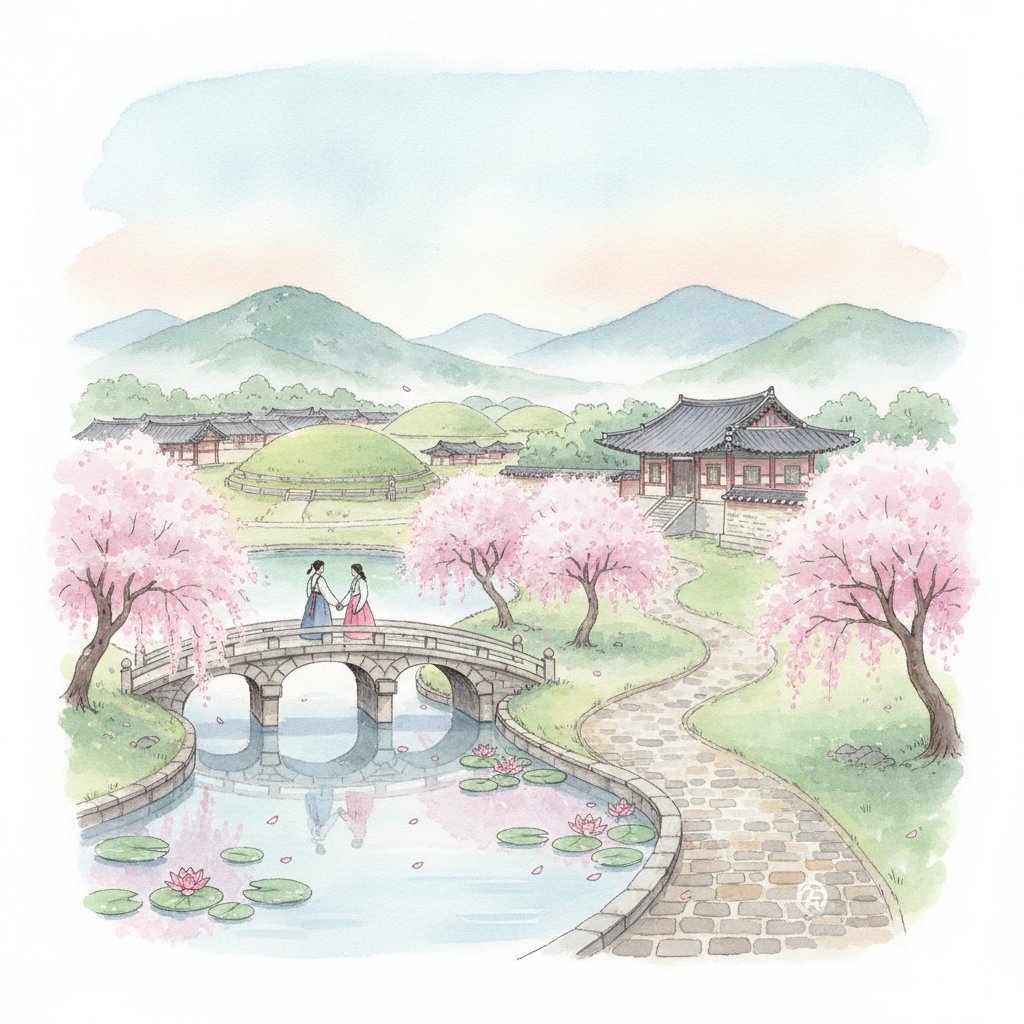
Scenes from the youth historical series Hwarang feature the distinctive rolling green mounds of Silla royal graves in the background during outdoor horseback riding and walking sequences. Walking past these giant grassy hills creates a surreal, dreamlike atmosphere that sets Silla-based dramas apart from Joseon-based shows.
Daereungwon is a massive park located in central Gyeongju containing 23 royal tombs from the Silla Kingdom era. The most famous tomb here is Cheonmachong (The Heavenly Horse Tomb), which visitors can step inside to view thousands of excavated artifacts, including pure gold crowns, glass ornaments, and horse saddlery, demonstrating Silla’s rich trade networks along the Silk Road.
How to get there
Daereungwon is located right in downtown Gyeongju. From the bus terminal, take Bus 10, 11, or 70 for 2 stops, or walk 10 minutes straight down Taejong-ro street toward Hwangridan-gil. The main entrance sits directly adjacent to the historic shopping district.
Make a Day of It
Exploring gyeongju drama filming spots works best when you group sites by geographic area. You can spend your morning step-by-step in the quiet hills of Yangdong Folk Village before heading into central Gyeongju for an afternoon and evening itinerary.
Start your downtown tour around mid-afternoon at Daereungwon Tomb Complex. After strolling between the ancient royal mounds, cross the street into Hwangridan-gil (황리단길). This trendy neighborhood features traditional hanok buildings repurposed into craft coffee shops, bakeries, and fusion restaurants. Try Hwangnam-ppang (Gyeongju sweet red bean pastries freshly baked on-site) or step into a full-table meal of Ssambap (rice wrapped in fresh vegetable leaves served with a dozen savory side dishes).
As sunset approaches, walk east from Hwangridan-gil past Cheomseongdae—the oldest surviving astronomical observatory in Asia—toward Woljeonggyo Bridge. End your day at Donggung Palace and Wolji Pond to watch the golden night lights transform the water into a glowing mirror.
| Time | Recommended Activity | Key Highlight |
|---|---|---|
| 09:30 AM | Yangdong Folk Village | Historic Hanok Walk |
| 01:00 PM | Hwangridan-gil Cafe Hop | Hwangnam-ppang & Coffee |
| 03:30 PM | Daereungwon Park | Royal Silla Tombs |
| 06:00 PM | Woljeonggyo Bridge | Sunset & River View |
| 07:30 PM | Donggung & Wolji Pond | Night Reflection Illumination |
Photo Tips
To capture photos that look like cinematic drama stills, timing and framing are key:
- Woljeonggyo Bridge: Walk down to the stone stepping-stone path across the Muncheon stream directly in front of the bridge. Frame your photo looking up at the illuminated structure from water level during dusk (blue hour).
- Yangdong Folk Village: Head up the walking track toward the Mucheomdang house around 10:00 AM. The morning light hits the curved tile roofs and earthen clay walls cleanly without casting harsh shadows.
- Daereungwon Tomb Complex: Locate the famous single magnolia tree nestled between two large tomb mounds. Stand on the main walkway slightly back with a telephoto lens setting (2x zoom on smartphones) to compress the background mounds for a painterly depth.
- Donggung Palace and Wolji Pond: Arrive roughly 20 minutes before sunset. Position your camera along the western curve of the pond so the three main illuminated wooden pavilions reflect perfectly onto the mirror-like surface. Use a small tripod or rest your camera on a flat ledge to avoid blur in low light.
FAQ
What is the best season to visit gyeongju drama filming spots?
Autumn (October through mid-November) and spring (April) offer the best experiences. Spring brings cherry blossoms lining the roads around royal tombs, while autumn covers Gyeongju in golden ginkgo and deep crimson maple leaves against traditional wooden architecture. Summer can be quite hot and humid for outdoor walking tours.
Can I rent a hanbok in Gyeongju to wear at filming spots?
Yes. You will find dozens of hanbok rental shops clustered around Hwangridan-gil and near the entrance of Daereungwon Tomb Complex. Prices usually range from 15,000 to 30,000 KRW for a few hours. Many shops offer both Joseon-style traditional attire and elaborate Silla royal costumes matching specific historical dramas.
How many days do I need to see all major Gyeongju K-drama locations?
A two-day, one-night stay is ideal. Day one allows you to comfortably explore downtown historic spots like Daereungwon, Hwangridan-gil, Woljeonggyo, and Donggung Wolji. Day two gives you time to travel slightly further out to Yangdong Folk Village and Bulguksa Temple without rushing your journey.
Keep Reading
- Bukchon Hanok Village: Goblin & K-Drama Filming Spots
- Iconic K-Drama Filming Spots at Amusement Parks
- KTX Busan Day Trip: Fight for My Way & Nevertheless Scenes
- Coffee Prince Cafe Day Trip in Seoul
🎟️ Popular tours & experiences in Korea
Klook.com