Jeju Island KDrama Spots from Our Blues and Samdal-ri
At a glance
- In shortA guide to iconic K-drama filming spots, local foods, and travel tips on Jeju Island.
- Best forK-drama fans and travelers visiting Jeju Island
- RegionJeju
- Featured inOur Blues, Welcome to Samdal-ri, Extraordinary Attorney Woo
- Key pointsSeopjikoji Cape features dramatic cliffs and volcanic coastal trails. · Aewol Coastal Trail includes Bomnal Cafe featured in Warm and Cozy. · Daejeong-eup and Sinsan-ri Port offer peaceful ocean views and local culture.
- Heads-upLocal bus schedules can vary by season, so check real-time departures via navigation apps.
When you step off the plane at Jeju International Airport and feel the salty ocean breeze brushing against your face, the island instantly feels like a living television set. For years, Jeju’s rugged basalt shorelines, emerald waters, and rolling green hills have served as the emotional core of iconic Korean television. Watching shows like Our Blues, Welcome to Samdal-ri, and Extraordinary Attorney Woo makes you fall in love not just with the characters, but with the quiet, wind-swept island life they inhabit.
As someone who has lived in Korea and traveled across Jeju during every season, I can tell you that visiting these real-world places feels like stepping right into your favorite scenes. The sea really is that turquoise, the stone walls really are that ancient, and the coastal roads hold the exact same calm charm you see on screen. Whether you are traveling by rental car or taking public buses around the island coast, these iconic Jeju filming spots offer a glimpse into the scenery that brought those stories to life.
Seopjikoji Cape
In classic and modern television series like Warm and Cozy and Boys Over Flowers, this dramatic coastline serves as the sweeping background where main characters take long, quiet walks against crashing ocean waves and steep volcanic cliffs. It is famous on screen for capturing the raw, poetic side of Jeju’s landscape.
In real life, Seopjikoji is a spectacular coastal cape located in Seongsan-eup on the eastern tip of Jeju Island. The name comes from the Jeju dialect, where ‘Seopji’ refers to the area’s historical name and ‘koji’ means a sudden cape or land protrusion into the sea. The trail winds along red volcanic scoria soil, yellow canola blossom fields in spring, and distinct rock formations jutting out of the water. Please note that while the coastal paths are open public land, visitors should stay on marked boardwalks to preserve the fragile coastline.
How to get there
From Jeju International Airport or Jeju City Intercity Bus Terminal, take Express Bus No. 101 running along the eastern coastal route. Get off at the Gwangchigi Beach or Seongsan Transfer Stop. From there, transfer to local feeder Bus No. 722-1 or 722-2, which stops near the main Seopjikoji entrance parking lot. The walk from the bus stop to the main viewpoint takes roughly 15 to 20 minutes along paved trails. Because local feeder bus schedules can vary depending on the season, it is best to check real-time departures on Naver Map or KakaoMap before departing.
✈️ Book your trip to Korea — hotels, flights & more
Aewol Handam Coastal Trail and Bomnal Cafe
This picturesque western oceanfront was transformed into the primary set for Warm and Cozy, serving as the seaside cafe and restaurant where the lead characters meet, work, and slowly build their romance right against the rocky shoreline.
Located in Aewol-eup on the northwestern shore of Jeju, this area features the Handam Coastal Walk, a winding pedestrian path cut directly into black volcanic rock above crystal-clear sea water. The actual cafe featured in the show, Bomnal Cafe, sits right at the edge of the harbor basin and remains an active, operating business today. The surrounding area has grown into a bustling hub of seaside coffee shops and bakeries. Since these businesses are privately run, visitors are expected to purchase a beverage if they wish to sit inside or use the outdoor seating patios.
How to get there
From Jeju City Terminal or Jeju Airport, board Express Bus No. 102 or Trunk Bus No. 202 heading west. Alight at the Handam-dong (한담동) bus stop. From the main road, follow the gentle paved walkway leading down toward the sea for about two minutes. You will immediately see the start of the Handam Coastal Trail and the vibrant cluster of cafes nestled against the shore.
Daejeong-eup Coastal Road
In Extraordinary Attorney Woo, Woo Young-woo and Lee Jun-ho sit along a low stone sea wall along this quiet coastal drive, gazing out over the water in hopes of spotting wild dolphins swimming past the coastline.
In real life, the southwestern coastline of Daejeong-eup (particularly around Sindo-ri and Mudeung-ri) is famous across Korea as a primary habitat for wild Indo-Pacific bottlenose dolphins. The coastline is lined with traditional low basalt stone walls that protect the road from ocean spray, punctuated by quiet wind turbines spinning in the breeze. The area remains a peaceful, residential fishing community rather than a heavily commercialized resort zone, so visitors should keep noise levels down and avoid parking in front of active private driveways or boat ramps.
How to get there
Take Express Bus No. 151 or 152 from Jeju Intercity Bus Terminal down to the Unjin Port or Moseulpo area in the south. From Moseulpo, transfer to local feeder Bus No. 752-1 heading toward Sindo-ri, and get off at Sindo-ri Port (신도리항). Because public bus intervals in this rural section of the island can be long, many visitors find it convenient to hire a local taxi from Moseulpo Terminal or rent a bicycle to ride along the flat coastal road.
🎟️ Popular tours & experiences in Korea
Klook.comSinsan-ri Port and Coastal Road
Featured prominently in ensemble dramas like Our Blues and coastal romances like Welcome to Samdal-ri, this quiet harbor represents the quintessential Jeju fishing village. It is where screen characters gather by the breakwater, unload daily catches, and navigate the tight-knit bonds of small-town island life.
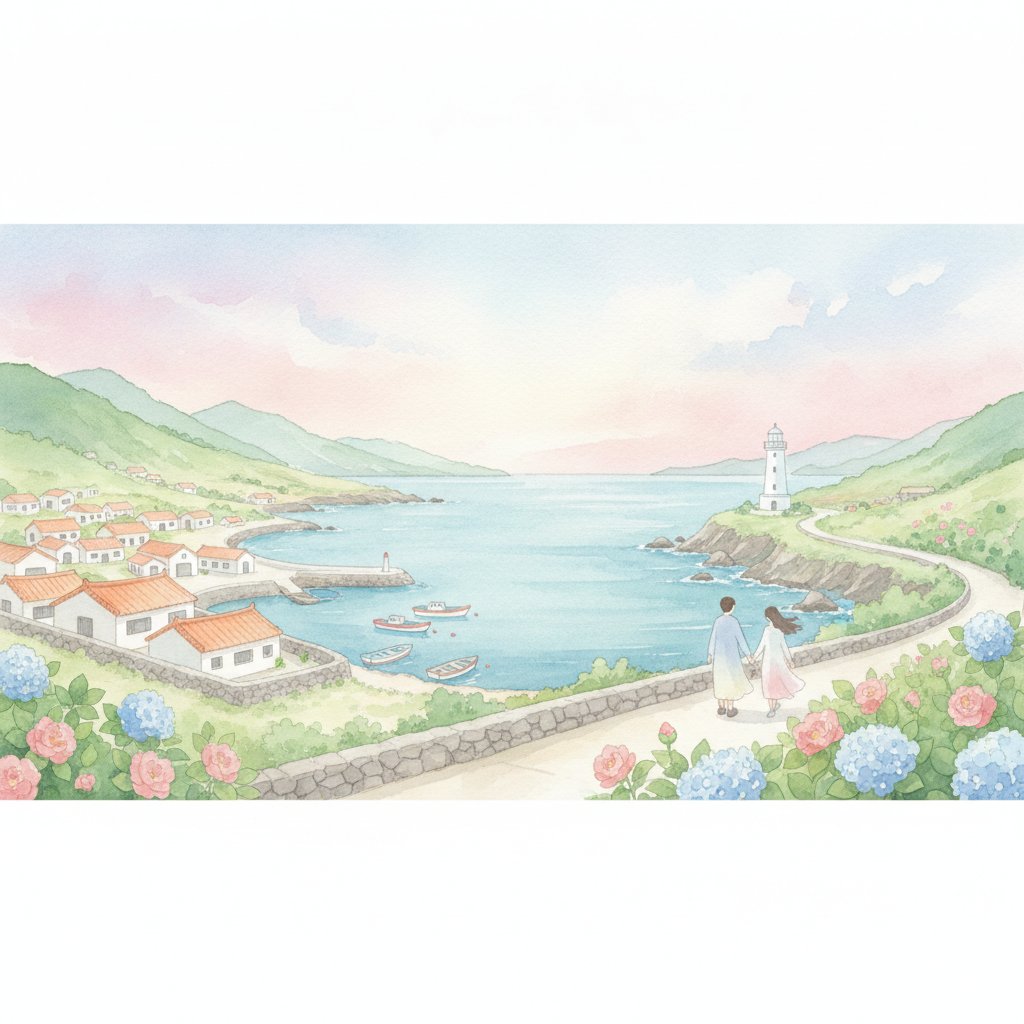
Sinsan-ri is a genuine, working coastal village in Seongsan-eup along Jeju’s southeastern shore. The port area features a distinct red lighthouse, quiet harbor basins filled with traditional fishing boats, and broad views of the sea where local haenyeo (female free-divers) often dive for sea urchins and abalone. Unlike major tourist destinations, Sinsan-ri offers an authentic look at daily Jeju life. Visitors should respect working harbor areas, give space to local fishermen and divers, and avoid trespassing on private docks.
How to get there
Board Trunk Bus No. 201 along the eastern route from Jeju City or Seongsan. Get off at the Sinsan-ri Village stop (신산리). From the bus stop, walk straight toward the ocean for about five minutes until you reach the Sinsan-ri local assembly hall and the small port area marked by its red breakwater lighthouse.
Make a Day of It
Visiting these drama spots gives you the perfect excuse to explore the rich regional culture and food around Jeju’s distinct coastlines.
If you are exploring the eastern destinations like Seopjikoji and Sinsan-ri Port, stop by a local village restaurant or a community diner run by the local sea divers’ association (Haenyeo Eochon-계). Try a comforting bowl of warm sea urchin seaweed soup (seongge-miyeokguk) or fresh abalone porridge (jeobok-juk). Pair your filming spot visits with a hike up the nearby Seongsan Ilchulbong (Sunrise Peak) or a peaceful walking stroll through the surrounding fields.
When spending the day along the western and southwestern coasts near Aewol or Daejeong-eup, indulge in Jeju’s famous grilled black pork (heuk-dweji) cooked over charcoal embers. In autumn and winter, stop at roadside farm stands to pick up fresh Jeju citrus fruits like hallabong and cheonhyeang. Nearby, you can explore the soaring basalt cliffs of Sanbangsan Mountain or wander through the tea fields of southwestern Jeju.
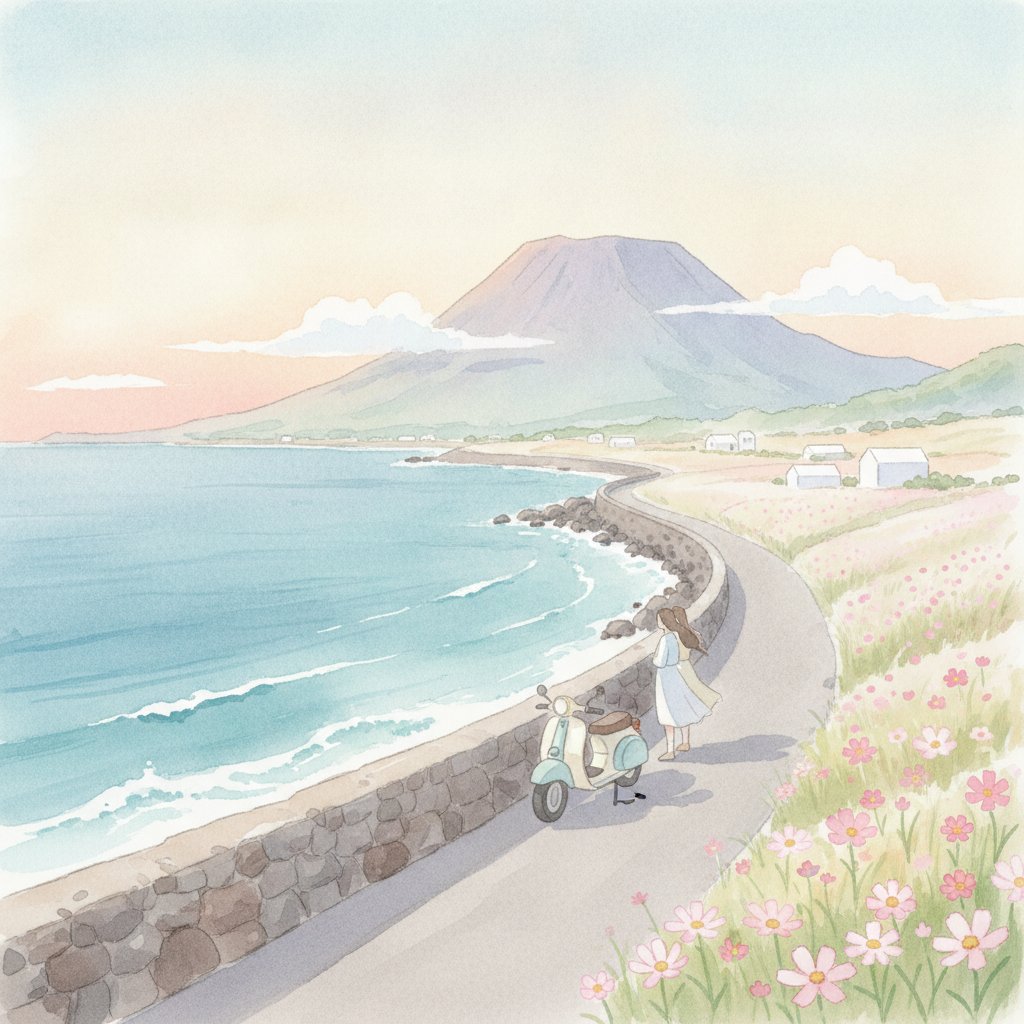
Photo Tips
Capturing the perfect shot at these scenic spots is all about timing, framing, and working with Jeju’s changing weather.
- Seopjikoji: To avoid harsh mid-day shadows and crowds, visit during late afternoon golden hour. Position yourself on the lower walking path facing the lighthouse, framing the grass-covered hills and blue ocean behind you.
- Aewol Coastal Walk: High tide is the best time for photos here, as the turquoise water fills the rocky coves right up to the wooden boardwalk. Stand slightly above the trail to capture the contrast between the dark basalt rocks and the bright sea.
- Daejeong Dolphin Coast: Keep your camera shutter speed fast or use continuous burst mode on your phone. Position yourself near the low stone walls facing southwest in mid-afternoon. If you are lucky enough to spot dolphins, shoot wide to capture them against the ocean horizon.
- Sinsan-ri Port: Early morning light creates a mirror-like glass reflection inside the quiet harbor basin. Stand near the inner pier, framing the bright red lighthouse in the background while capturing the painted fishing boats in the foreground.
Frequently Asked Questions
Can I visit these Jeju drama spots using public buses?
Yes, all major coastal locations listed in this guide are accessible via Jeju’s public bus network, particularly Trunk Bus No. 201 (East Coast) and No. 202 (West Coast). However, because rural feeder buses run less frequently, using English-friendly navigation apps like Naver Map or KakaoMap is essential for real-time bus tracking and route planning.
Are these locations free to enter, and do I need reservations?
The outdoor coastal paths, public ports, and walking trails mentioned—such as Seopjikoji, Handam Trail, Daejeong Coastal Road, and Sinsan-ri Port—are open public spaces with free access and no advance reservations required. Private businesses along these routes, such as seaside cafes, require patrons to buy food or drinks.
What is the best season to visit Jeju to see these locations?
Spring (March to May) and autumn (September to November) offer the most pleasant weather for exploring outdoor filming locations. Spring brings blooming canola flowers and pleasant breezes, while autumn delivers crisp clear skies, milder temperatures, and golden silver-grass fields across the coastal hills.
🎟️ Popular tours & experiences in Korea
Klook.comMore on Regional Korean Filming Destinations
- Winter Sonata Nami Island Day Trip GuideA guide to finding Winter Sonata filming locations on Nami Island and planning a day trip.
- Fight For My Way Filming Locations in BusanA local guide to visiting iconic Fight For My Way filming spots and hillside views in Busan.
- Descendants of the Sun Taebaek Filming SpotsGuide to visiting Descendants of the Sun filming locations in Taebaek, Gangwon Province.
See every Regional Korean Filming Destinations post in our Fan Travel Tips guide.
Handy toolsK-Drama Location Finder
Keep Reading
- Business Proposal Drama Locations in Seoul and Incheon
- Real Hotel Del Luna Filming Spots You Can Visit in Korea
- Extraordinary Attorney Woo Filming Locations in Suwon
- Uncover Seoul’s Cinematic Side: Parasite to Kingdom Filming Locations
🎟️ Popular tours & experiences in Korea
Klook.com