Visiting 4 Famous Historical Korean Drama Film Sets
At a glance
- In shortOverview and travel guide for visiting four famous historical Korean drama filming sites.
- Best forFans planning to visit historical K-drama film sets
- RegionMultiple regions
- Featured inKingdom, The Red Sleeve, Mr. Sunshine
- Key pointsYongin Daejanggeum Park features permanent timber architecture for MBC dramas. · Mungyeong Saejae offers fortress and mountain backdrops for epic battle scenes. · Sunshine Studio showcases early 1900s modern and traditional architecture.
- Heads-upCheck local bus schedules at Baekam since local buses run on fixed hourly intervals.
Stepping onto the Wooden Verandas of History
Walking through Yongin Daejanggeum Park on a crisp October morning feels like stepping across six centuries without leaving Gyeonggi Province. You hear the rustle of heavy fabric, except it is not a crew member rushing with a costume change—it is just the autumn breeze passing through timber pavilions built specifically for screen royalty. For anyone who has stayed up until two in the morning watching royal court intrigues, Joseon crown princes, or heroic sword fights, making a historical korean drama film sets visit is the ultimate way to bring those screen memories into the real world.
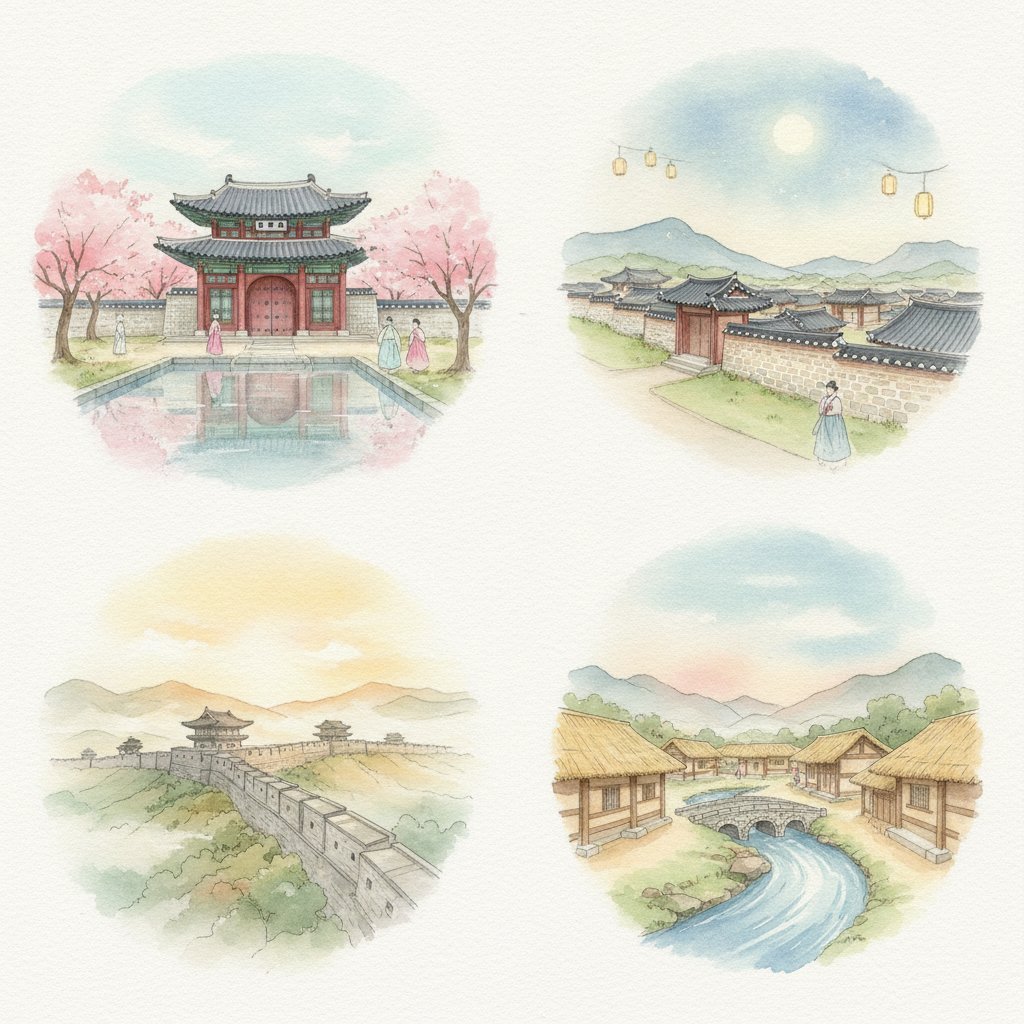
Historical Korean dramas, or sageuk, owe much of their magic to sets that meticulously recreate the past. From expansive open-air parks hidden in mountain valleys to authentic Joseon-era palaces in the heart of Seoul, these filming sites allow international fans to walk the exact stone paths where iconic stories unfolded. Whether you are searching for the dark, misty fortresses of zombie thrillers or the quiet, lantern-lit bowers of historical romances, these four well-documented sets offer an unforgettable peek behind the lens.
✈️ Book your trip to Korea — hotels, flights & more
1. Yongin Daejanggeum Park (Yongin)
This massive film set is where Crown Prince Lee Chang navigates political treachery in Kingdom, and where royal court romances come to life in The Moon Embracing the Sun and The King’s Affection. If you have watched a major historical drama produced by MBC over the last fifteen years, chances are high that several scene-stealing moments were shot right here.
In real life, Yongin Daejanggeum Park is an expansive, permanent open set owned by the MBC broadcasting network. Spanning over two million square meters, it contains historically accurate replicas of architecture from the Three Kingdoms, Goryeo, and Joseon periods. Unlike temporary structures, these buildings are constructed from solid timber according to traditional Korean architectural methods, giving them an authentic, weathered beauty that looks spectacular in person.
How to Get There
Take the Seoul Subway to Nambu Bus Terminal Station (Line 3). From the express bus terminal, take an intercity bus to Baekam Bus Terminal (takes about 50 to 60 minutes). At Baekam, transfer to local Bus No. 105 or take a 10-minute taxi directly to Yongin Daejanggeum Park. Make sure to check local bus schedules upon arrival at Baekam, as local routes run on fixed hourly intervals.
2. Mungyeong Saejae Open Set (Mungyeong)
This mountain-encircled fortress set served as the epic backdrop for battle sequences and tense gate defenses in Kingdom, as well as memorable moments in The Red Sleeve and Tale of the Nine-Tailed 1938. The dramatic mountain walls rising behind the wooden gates give every scene shot here an unmatched grandeur.
Located inside the scenic Mungyeong Saejae Provincial Park in North Gyeongsang Province, this location was originally constructed by KBS in 2000 for historical broadcasts and later remodeled by the local government into a Joseon-era set. Because it sits inside a protected mountain pass that scholars and military forces actually crossed during the Joseon Dynasty, the line between TV fiction and real Korean history feels refreshingly blurred here.
How to Get There
From Seoul, go to Dong Seoul Bus Terminal (Gangbyeon Station, Line 2) and take an express bus to Mungyeong Bus Terminal (roughly two hours). From the Mungyeong bus station, board a local city bus bound for Mungyeong Saejae (문경새재) and ride it to the final stop near the park entrance. The walk from the main park gates to the filming set takes about fifteen minutes along a gently sloping paved path.
🎟️ Popular tours & experiences in Korea
Klook.com3. Sunshine Studio (Nonsan)
Here, Eugene Choi and Go Ae-shin navigate the twilight years of the Joseon Dynasty in Mr. Sunshine. The set captures the precise moment in history when modern electric streetcars, Western-style brick hotels, and traditional hanok houses coexisted along the streets of Hanseong (early 1900s Seoul).
Located within Sunshine Land in Nonsan, South Korea, Sunshine Studio is a joint effort between the city of Nonsan and the production team behind the hit drama. It is one of the few historical sets in Korea dedicated specifically to the early modern period (Late Joseon to the Korean Empire era). The detail is staggering: hand-painted advertisements, period glass windows, and a fully reconstructed glory hotel give visitors an immersive sense of turning back time to 1900.
How to Get There
Take the KTX high-speed train from Yongsan Station in Seoul to Nonsan Station (about 1 hour and 30 minutes). From Nonsan Station, take city bus No. 216 or No. 201 to the Sunshine Land stop, or opt for a 20-minute taxi ride directly to the facility. Since bus frequencies in suburban Nonsan can vary, a taxi is often the most convenient option for international travelers.
4. Gyeongbokgung Palace (Seoul)
This real-life palace is where Crown Prince Hyomyeong walks through twilight corridors in Love in the Moonlight and where King Yi San paces royal courtyards in The Red Sleeve. It remains the gold standard backdrop for Joseon-era drama storytelling.
Gyeongbokgung is the main royal palace constructed in 1395 at the start of the Joseon Dynasty. Located in central Seoul, it is not a television replica but the genuine historical site where kings ruled. While actual drama filming is restricted during public operating hours to protect the heritage structures, the palace regularly hosts controlled filming shoots and serves as the visual inspiration for almost every Joseon film set in the country.
How to Get There
Take Seoul Subway Line 3 directly to Gyeongbokgung Station and take Exit 5. The exit leads right into the courtyard of the palace grounds. Alternatively, take Line 5 to Gwanghwamun Station (Exit 2) and walk five minutes north through Gwanghwamun Square.
Historical Film Sets Quick Comparison
| Location | Signature Dramas | Historical Period |
|---|---|---|
| Yongin Daejanggeum Park | Kingdom, The Red Sleeve | Goryeo & Joseon Eras |
| Mungyeong Saejae Set | Kingdom, Bossam | Mid-to-Late Joseon |
| Sunshine Studio | Mr. Sunshine | Early 1900s / Modern |
| Gyeongbokgung Palace | Love in the Moonlight | Real Joseon Dynasty Palace |
Make a Day of It
Visiting a historical korean drama film sets visit destination is best combined with local food and regional sight-seeing. When visiting Yongin Daejanggeum Park, head into Yongin Central Market afterward to try sundae gukbap (blood sausage soup) or local street snacks like handmade fried dumplings. If you make the trip out to Mungyeong Saejae, stop by a local restaurant near the park entrance for Omija samgyeopsal—grilled pork belly seasoned with locally grown schisandra berries, a regional specialty famous across Korea.
For those visiting Sunshine Studio in Nonsan, pair your day with a trip to nearby Topjeongho Lake, home to a massive suspension bridge offering panoramic water views. If you are staying in Seoul for Gyeongbokgung Palace, rent a traditional Hanbok from a rental shop in the neighboring West Village (Seochon) or Bukchon Hanok Village. Wearing traditional clothing gives you free admission to Gyeongbokgung and lets you sample local teas at traditional tea houses hidden in the alleyways.
Photo Tips
To capture photos that look like cinematic drama stills, pay close attention to your framing and lighting:
- Find Low Angles near Gateways: Stand slightly below grand entry gates like the main pavilions in Yongin or Mungyeong. Angle your camera slightly upward to capture the curved tile eaves (giwa) framing the sky.
- Golden Hour Shadows: Visit open sets during early morning or late afternoon (around 3:30 PM to 5:00 PM). The long side lighting creates deep shadows along the wooden colonnades, giving photos a dramatic, melancholic mood similar to emotional drama scenes.
- Framing with Doorways: Pose inside a traditional sliding door frame or wooden veranda looking out toward a garden courtyard. This natural framing trick is used constantly by K-drama directors to convey solitude or secret romance.
🎟️ Popular tours & experiences in Korea
Klook.comFAQ
Do I need to book tickets in advance for Korean drama film sets?
For most open sets like Yongin Daejanggeum Park, Mungyeong Saejae, and Sunshine Studio, tickets can be purchased directly at the ticket booth on the day of your visit. However, if you plan to visit Gyeongbokgung Palace for special night openings ( held during spring and autumn), those tickets require advance online booking due to extremely high demand.
Can I rent a Hanbok at these historical film sets?
Yes, Hanbok rental shops are abundant directly outside Gyeongbokgung Palace in Seoul and inside Sunshine Studio (which also offers early 1900s retro suits and dresses). Yongin Daejanggeum Park offers a small rental office on-site, though selection can vary by season, so checking ahead on their official website is recommended.
How do I know if a film set is closed due to active filming?
Most major film sets remain open to the public even during active filming days, though specific pavilions or courtyards may be temporarily restricted by crew members. Check the venue’s official website or local municipal tourism notices before traveling, as full site closures are rare but usually posted a few days in advance.
More on Historical Film Sets
- Seoul K-Drama Palace Locations GuideGuide to visiting iconic K-drama palace filming locations and nearby spots in Seoul.
- Seoul Filming Locations: Parasite & KingdomA guide to Seoul filming locations for Parasite and Kingdom with directions for visiting each spot.
- Sunshine Studio Nonsan Filming Set GuideA visitor guide to Sunshine Studio in Nonsan, highlighting drama sets, directions, and nearby day-trip stops.
See every Historical Film Sets post in our Fan Travel Tips guide.
Handy toolsK-Drama Location Finder
Keep Reading
- Real Secretary Kim Filming Locations You Can Visit in Korea
- Real Squid Game Filming Locations in Seoul and Incheon
- 4 Scenic Korean Campus Filming Spots from Top K-Dramas
- Visiting Sunshine Studio Nonsan: Mr. Sunshine Film Set Guide
🎟️ Popular tours & experiences in Korea
Klook.com