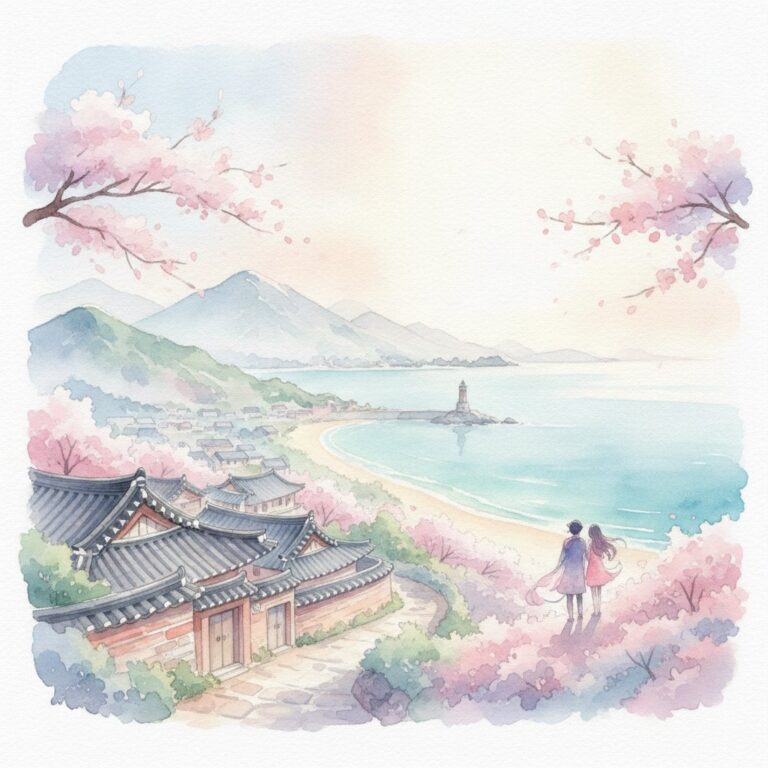
Hometown Cha-Cha-Cha: Gongjin Filming in Pohang
At a glance
- In shortA guide to visiting real-life Hometown Cha-Cha-Cha filming locations in Pohang with travel directions.
- Best forK-drama fans planning a trip to Pohang filming sites
- RegionGyeongsang
- Featured inHometown Cha-Cha-Cha
- Key pointsCheongha Market in Pohang served as Gongjin's Chungjin Market. · The iconic red boat is an art installation in Sabang Memorial Park. · Wolpo Port features the drama's iconic red lighthouse.
- Heads-upThe characters' houses are private residences, so respect locals and avoid trespassing.
Annyeong haseyo, fellow K-drama travelers!
Your friendly neighborhood K-drama fan here, brimming with excitement to whisk you away to one of the most heartwarming towns ever graced by our screens: Gongjin from Hometown Cha-Cha-Cha!
This beloved drama, starring the enchanting Shin Min-a as the stylish dentist Yoon Hye-jin and the ever-charming Kim Seon-ho as the versatile Chief Hong Du-sik, captured our hearts with its idyllic seaside setting, its quirky yet lovable villagers, and of course, the utterly delightful romance that blossomed between our lead couple. Every scene, from the bustling market to the tranquil beach, felt like a warm hug, leaving us all wishing we could pack our bags and move to Gongjin ourselves.
The picturesque backdrop of Gongjin isn’t just a fantasy; it’s a real place, primarily found in the stunning coastal city of Pohang, Gyeongsangbuk-do. So many pivotal and sweet moments unfolded against these beautiful real-life Hometown Cha-Cha-Cha filming locations, making us fall deeper in love with the show and Korea’s beautiful eastern coast. If you’re dreaming of walking in Hye-jin and Du-sik’s footsteps, feeling the same refreshing sea breeze, and soaking in that unique heartwarming atmosphere, you’ve come to the perfect place! I’m here to guide you through the real-life Gongjin, offering tips from a local fan’s perspective to help you plan your unforgettable K-drama trip.

✈️ Book your trip to Korea — hotels, flights & more
The Heart of Gongjin: Cheongha Market (청하5일장)
Remember all those bustling scenes where Chief Hong was always lending a helping hand, or where Hye-jin would awkwardly try to fit in, buying groceries and chatting with the locals? That’s our Cheongha Market! In the drama, it’s known as Chungjin Market, the vibrant hub of Gongjin where all the villagers’ lives intersect. From the fresh seafood stalls to the colorful produce, this market truly felt like the beating heart of the community.
In real life, this is Cheongha Market (청하5일장), a traditional five-day market in Cheongha-myeon, Pohang. While it might not always be as bustling as it was on screen (especially outside of its specific market days, which are on dates ending in 1 and 6, like the 1st, 6th, 11th, 16th, 21st, 26th of each month), the charm and familiar structures are undeniable. You’ll instantly recognize the small shops and the general layout. Many of the actual shops seen in the drama, like the ‘Cheongho Hardware Store,’ were set up in existing buildings around this market square.
How to get there
- By Bus from Pohang: From the Pohang Intercity Bus Terminal or the main downtown area (like Yeongildae Beach), you can take a local bus (e.g., Bus No. 510 or 5000) heading towards Cheongha-myeon. The journey typically takes around 40-60 minutes depending on traffic. Get off at ‘Cheongha Market’ (청하5일장) or ‘Cheongha Nonghyup’ (청하농협) bus stop.
- By Taxi: A taxi from Pohang city center will take approximately 25-35 minutes and costs around 20,000-25,000 KRW, depending on your starting point.
Local Tip: Always use a navigation app like KakaoMap or Naver Map in Korea. They provide real-time bus schedules and routes, which are incredibly helpful!
Yoon Hye-jin’s Dental Clinic & Cheongho Hardware Store
Directly across from Cheongha Market, you’ll find the iconic building that served a dual purpose in the drama. Initially, it was Dr. Yoon Hye-jin’s shiny new dental clinic, ‘Yoon Dental Clinic,’ a stark contrast to the rustic village. Later, after Hye-jin’s friend Mi-seon decided to stay in Gongjin, it transformed into the ‘Cheongho Hardware Store.’ Many significant scenes, from Hye-jin’s initial struggles to her growing bond with the villagers, unfolded right here.
In reality, this building was a vacant real estate agency transformed into the drama’s set. Today, the building still stands, and while the dental clinic signs are gone, you might still feel a surge of nostalgia just looking at its familiar exterior. It’s a perfect spot for a photo-op, recreating your favorite scenes!
How to get there
- On Foot from Cheongha Market: This location is literally a stone’s throw away from Cheongha Market. Once you’re at the market square, just look across the street, and you’ll easily spot it. It’s part of the same central cluster of Gongjin filming locations.
🎟️ Popular tours & experiences in Korea
Klook.comThe Iconic Boat on Mugeunbong Peak (Sabang Memorial Park)
Who could forget the majestic red boat perched atop a hill, where Chief Hong Du-sik often sought solace, gazed out at the sea, and had deep conversations? This iconic spot, often referred to as the ‘Boat on the Hill,’ is one of the most memorable and visually stunning Hometown Cha-Cha-Cha filming locations, representing a place of reflection and hope.
This isn’t a prop specially built for the drama; it’s a real art installation located within Sabang Memorial Park (사방기념공원), near Wolpo Beach. The boat itself is a symbol of Pohang’s history with coastal erosion control and afforestation, a monument commemorating the efforts to green the mountains near the sea. Getting to it involves a bit of a hike, but the breathtaking panoramic views of the ocean make every step worthwhile.
How to get there
- By Bus & Walk: From Pohang Intercity Bus Terminal or downtown, take a local bus (e.g., Bus No. 510) towards Wolpo Beach (월포해수욕장). Get off at ‘Sabang Memorial Park’ (사방기념공원) bus stop. From there, it’s about a 15-20 minute uphill walk to reach the boat. The paths are well-maintained, but wear comfortable shoes!
- By Taxi: A taxi can take you directly to the entrance of Sabang Memorial Park, significantly shortening the walk.
Chief Hong’s House & Grandmother Gam-ri’s House (Private Residences)
Many of the character’s homes, especially Chief Hong Du-sik’s charming hillside house with its stunning ocean view, and the cozy home of the beloved grandmother Gam-ri, are central to the drama’s narrative and atmosphere. These houses truly made Gongjin feel lived-in and real.
In reality, these are private residences located in a small village near Wolpo Beach. While they are publicly visible, it’s crucial to remember that people actually live here. You can admire them from a distance and take photos, but please, please, be respectful of the residents’ privacy. Do not trespass, make excessive noise, or disturb their daily lives. The magic of Gongjin comes from its community, and respecting that community is key.
How to get there
- By Bus & Walk: These houses are generally located in the general vicinity of Wolpo Beach and Sabang Memorial Park. From Wolpo Beach bus stop, you can explore the surrounding smaller roads. They are not signposted as tourist attractions, so you might need to use a map and some keen observation to find them. Keep an eye out for familiar exteriors!
- By Taxi: Taking a taxi to the Wolpo Beach area and then walking around is often the most convenient way to explore this residential area, but again, utmost respect for privacy is essential.
The Iconic Pohang “Gongjin” Lighthouse (Wolpo Port Red Lighthouse)
The red lighthouse, where Hye-jin and Du-sik had many heartfelt conversations, shared secrets, and grew closer, is an unforgettable landmark of Gongjin. It symbolizes their journey and the guiding light in their lives.
This is the Wolpo Port Red Lighthouse (월포항 빨간등대), located specifically within the Wolpo Port area, close to Wolpo Beach. It’s not a grand, towering lighthouse but a charming, modest one that perfectly encapsulates the simple, genuine beauty of Gongjin. It’s easily accessible and offers lovely views of the fishing port and the coastline, making it another fantastic spot to relive your favorite drama moments.
How to get there
- On Foot: If you’re already exploring the Wolpo Beach area or have visited the nearby Sabang Memorial Park, the Wolpo Port Red Lighthouse is a relatively easy walk along the coastline or through the small fishing village. Just follow the coastal road or path towards Wolpo Port.
- By Bus: Take a bus to Wolpo Beach (월포해수욕장) as mentioned for other locations, then enjoy a pleasant walk to the lighthouse.

Make a Day of It: Beyond Gongjin
Pohang is much more than just the enchanting town of Gongjin! After you’ve explored the main Hometown Cha-Cha-Cha filming locations, why not make a full day (or even a weekend!) out of your trip?
- Feast on Fresh Seafood: Being a coastal city, Pohang is renowned for its incredible seafood. Head to Jukdo Market (죽도시장), one of Korea’s largest traditional markets, where you can pick your fresh catch and have it prepared on the spot at one of the many restaurants. Or, simply enjoy a hearty meal at one of the local eateries around Cheongha Market or Wolpo Beach. Try mulhoe (spicy cold raw fish soup) for a refreshing and distinctly Pohang dish!
- Homigot Sunrise Square (호미곶 해맞이광장): If you’re an early bird, Homigot is the easternmost point of the Korean peninsula and famous for its stunning sunrise views, particularly the ‘Hands of Harmony’ sculpture rising from the sea. It’s a bit further south from the Gongjin area but a must-see in Pohang.
- Yeongildae Beach (영일대해수욕장): This is Pohang’s most popular urban beach, featuring a long pier that extends into the sea, leading to a beautiful pavilion. It’s a great spot for an evening stroll, enjoying the city lights, and soaking in the relaxed atmosphere.
- Chilpo Beach & Cafe Street: For more scenic cafes with ocean views, explore the area around Chilpo Beach, just a short drive from Cheongha. It’s perfect for a relaxing coffee break while watching the waves.
Photo Tips for Your K-Drama Trip
To capture those perfect fan-worthy shots at the Hometown Cha-Cha-Cha filming locations:
- Cheongha Market: For that bustling, lively vibe, visit in the mid-morning, ideally on a market day (dates ending in 1 or 6). Capture the iconic ‘Cheongha Market’ sign and the various stalls.
- Dental Clinic/Hardware Store: Stand where Hye-jin often stood, looking back at the market square. Golden hour (late afternoon) often provides a beautiful, soft light.
- The Boat on Mugeunbong Peak: The most iconic shot is from the path leading up to it, with the boat framed against the vast ocean and sky. Early morning or late afternoon light makes for dramatic skies and softer shadows. Don’t forget to get a shot of the panoramic view from the boat itself!
- Pohang “Gongjin” Lighthouse: Capture the red lighthouse with the blue sea and the fishing boats in the background. Sunset can be particularly beautiful here, painting the sky with warm hues.
🎟️ Popular tours & experiences in Korea
Klook.comFAQ: Your Gongjin Travel Questions Answered!
Is Gongjin a real place in Korea?
No, Gongjin is a fictional town created for Hometown Cha-Cha-Cha. However, almost all of its charming scenes were filmed in the real-life coastal city of Pohang, Gyeongsangbuk-do, particularly in the Cheongha-myeon area and around Wolpo Beach.
How far is Pohang from Seoul, and what’s the best way to get there?
Pohang is quite accessible from Seoul. The fastest way is by KTX high-speed train from Seoul Station, which takes approximately 2.5 to 3 hours. Alternatively, you can take an express bus from Seoul Express Bus Terminal, which takes about 4 to 4.5 hours.
Is it easy to visit the Hometown Cha-Cha-Cha filming locations without a car?
Yes, it’s definitely possible to visit the main locations using a combination of local buses and walking. The core Gongjin area (Cheongha Market, dental clinic) is easily walkable once you arrive. For locations like the Boat on the Hill and the lighthouse, local buses can get you to the general area, requiring a bit more walking or a short taxi ride. While having a car offers more flexibility, public transport is reliable if you plan your routes using apps like KakaoMap or Naver Map.
More on Coastal & Regional Filming
- Winter Sonata Filming Locations on Nami IslandA guide to iconic Winter Sonata filming spots on Nami Island and travel options from Seoul.
- Twenty-Five Twenty-One Filming Spots GuideA travel guide to iconic filming locations for Twenty-Five Twenty-One in Jeonju and Gurye.
- Goblin Filming Locations: Jumunjin & GochangHow to visit the breakwater and buckwheat field filming locations from the drama Goblin.
See every Coastal & Regional Filming post in our Drama Locations guide.
Handy toolsK-Drama Location Finder
Keep Reading
- Itaewon Class: Saeroyi’s Filming Spots Walking Tour
- Squid Game: Gi-hun’s Filming Locations in Seoul
- Crash Landing on You: Korea Filming Locations
- Alchemy of Souls Filming Locations You Can Visit in Korea
🎟️ Popular tours & experiences in Korea
Klook.com