Best Season for Drama Locations Korea: Goblin & Beyond
At a glance
- In shortA guide to visiting top K-drama filming locations in Korea during their best seasons.
- Best forK-drama fans planning trips to filming locations in Korea
- RegionMultiple regions
- Featured inGoblin, Winter Sonata, Hi Bye, Mama!
- Key pointsVisit locations in their featured season for the exact visual atmosphere. · Four top locations are Jumunjin, Nami Island, Yeojwa Stream, and Deoksugung. · Pair location visits with nearby local dishes and attractions for a full day.
- Heads-upCaution is required at Jumunjin Breakwater due to high winds and slippery rocks.
Timing Your K-Drama Pilgrimage Across Korea’s Four Seasons
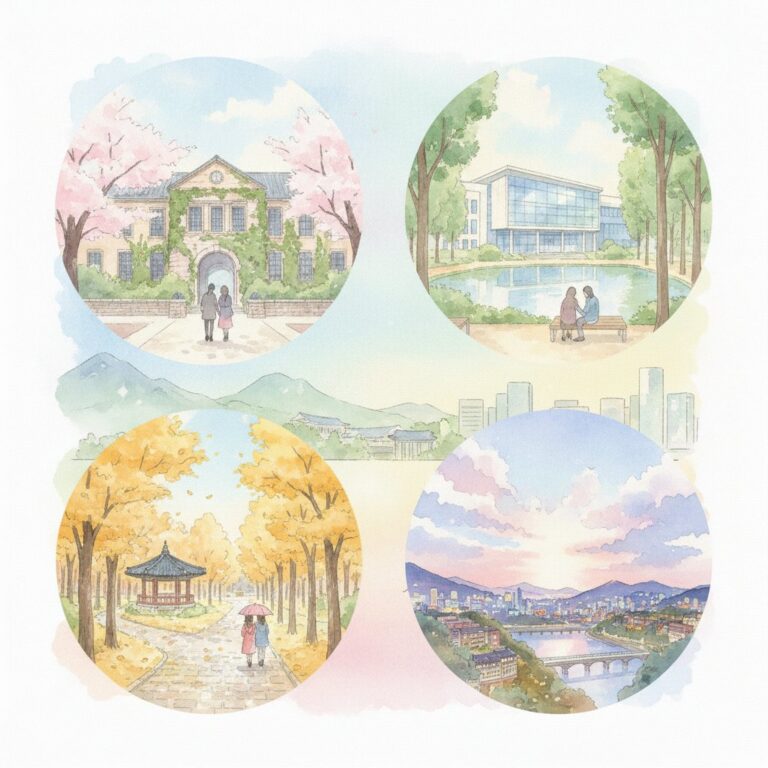
Standing on the rocky Jumunjin breakwater in late November, with icy ocean spray misting your face and a crimson scarf wrapped tight, you instantly feel the raw emotional weight that Korean cinematographers capture so effortlessly. Korea experiences four intensely distinct seasons, and location scouts rarely pick filming spots by accident. A golden canopy of autumn leaves along a historical palace wall or a quiet blanket of snow over an island pine trail can turn a tender conversation into iconic television history. If you are planning a trip to step into your favorite screen moments, knowing the best season for drama locations Korea has to offer will completely transform your travel experience.
While many filming spots remain open year-round, visiting during the specific season featured on screen gives you the exact color palette, atmosphere, and visual magic you remember from the drama. Spring brings delicate cherry blossom showers, summer turns the countryside a vibrant emerald green, autumn paints mountain paths in fiery hues, and winter brings a quiet, atmospheric romance. Here is a local guide to four legendary filming locations, when you should visit them, and how to get there smoothly.

✈️ Book your trip to Korea — hotels, flights & more
Jumunjin Breakwater: Crisp Winter Waves in Gangneung
In the beloved fantasy romance Goblin (Guardian: The Lonely and Great God), this coastal jetty serves as the backdrop for the fateful first summon where Ji Eun-tak accidentally calls Kim Shin while holding a bouquet of red buckwheat flowers. The dramatic contrast between the deep blue ocean, white breaking waves, and the solitary figures on the concrete pier captured hearts worldwide.
In real life, the site consists of several coastal erosion breakwaters along Jumunjin Beach in Gangneung, Gangwon Province. While stunning throughout the year, late autumn and winter offer the exact overcast skies, moody atmosphere, and crisp ocean breezes seen in the show. Because the area is directly exposed to high winds and rough waves, caution is essential when walking out onto the slippery concrete rocks.
How to get there
Take the KTX High-Speed Rail from Seoul Station or Cheongnyangni Station to Gangneung Station (approx. 2 hours). From Gangneung Station, take City Bus No. 300 or 302 toward Jumunjin Beach, getting off near the Hyangho Beach or Jumunjin Port stop. Alternatively, a 25-minute taxi ride from Gangneung Station brings you straight to the shore entrance.
Nami Island: Golden Autumn and Winter Dreams in Chuncheon
Famous as the foundational filming location for Winter Sonata, Nami Island also made memorable appearances in dramas like Hi Bye, Mama! and When the Camellia Blooms. In Winter Sonata, the lead characters stroll down the tall Metasequoia Lane, establishing a aesthetic template for K-drama romance that endures to this day.
Nami Island is a half-moon shaped river island situated in Chuncheon, Gangwon Province. It is renowned for its lined tree walkways, including ginkgo, pine, and metasequoia paths. Autumn (late October to early November) transforms the island into a breathtaking universe of bright gold and deep crimson leaves, while winter (December through February) delivers snow-covered tree arches that evoke classic television nostalgia.
How to get there
Board the ITX-Cheongchun train from Yongsan Station or Cheongnyangni Station in Seoul to Gapyeong Station (approx. 55 minutes). From Gapyeong Station, catch the local Gapyeong City Tour Bus or take a short 5-minute taxi to Gapyeong Wharf. From the wharf, visitors take a short 10-minute ferry ride across the river to reach the island entrance.
🎟️ Popular tours & experiences in Korea
Klook.comYeojwa Stream and Romance Bridge: Peak Spring Blossoms in Jinhae
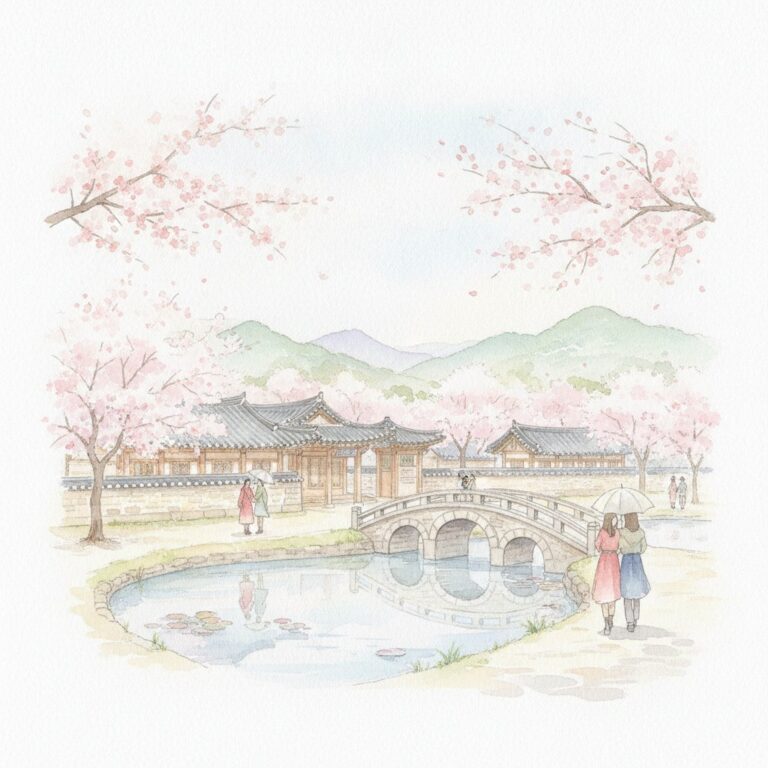
Featured prominently in the classic drama Romance as well as modern series like A Korean Odyssey, the wooden bridge crossing Yeojwa Stream is where characters meet surrounded by a canopy of pale pink cherry blossoms. The gentle stream flowing below reflects millions of falling petals, creating one of the most romantic visuals in Korean media.
Located in the coastal Jinhae district of Changwon, South Gyeongsang Province, Yeojwa Stream becomes the centerpiece of Korea’s largest annual spring cherry blossom celebration, the Jinhae Gunhangje Festival. Early spring (typically late March to early April) is the absolute best time to visit, as hundreds of cherry trees bursting into full bloom align the narrow stream channel for nearly a kilometer.
How to get there
From Seoul, take an intercity bus from the Seoul Express Bus Terminal directly to Jinhae Bus Terminal (approx. 4 hours). Alternatively, take a KTX train from Seoul to Changwon Central Station, then transfer to a local city bus or taxi heading to Jinhae. Yeojwa Stream is within reasonable walking distance or a short taxi ride from the central Jinhae terminal area.
Deoksugung Stone-Wall Road: Autumn Walkways in Heart of Seoul
This romantic pedestrian pathway appears in dozens of dramas, most notably Goblin (where the Grim Reaper and Sunny have their emotional encounters) and Extraordinary Attorney Woo. The stone wall creates a historical, intimate boundary between the busy modern metropolis and the royal heritage of Deoksugung Palace.
Located in the Jeong-dong neighborhood of central Seoul, the stone-wall road curves gracefully around the perimeter of Deoksugung Palace. Autumn (mid-October to mid-November) is undeniably the best season to walk this path. The massive ginkgo trees overhang the stone walls, dropping a brilliant carpet of golden leaves along the cobblestone street. Because this is a public pedestrian route, it is accessible at all hours, though morning sunlight filtering through the yellow leaves creates the best visual experience.
How to get there
Take the Seoul Subway Line 1 or Line 2 to City Hall Station. Head toward Exit 1, 2, or 12. The entrance to Deoksugung Stone-Wall Road sits right alongside the main gate of Deoksugung Palace, just a few steps from the subway exits.
Make a Day of It
Turn your filming location visits into full daily itineraries by pairing each spot with local food specialities and nearby cultural attractions.
- Gangneung (Jumunjin): After shooting photos at the breakwater, head inland to the nearby Chodang Tofu Village to warm up with a bowl of warm, freshly made sundubu jjigae (soft tofu stew). Don’t forget to sample the famous soft-tofu gelato available in local dessert shops nearby.
- Chuncheon & Gapyeong (Nami Island): Combine your trip to Nami Island with a stop at Chuncheon’s famous Myeongdong Dakgalbi Street to enjoy spicy stir-fried chicken with rice cakes and cheese. Nearby attractions include Petite France and the Garden of Morning Calm, both of which are prominent drama spots in their own right.
- Jinhae: During cherry blossom season, local food stalls line the streets around Yeojwa Stream offering seasonal snacks like cherry blossom-shaped pastries (beotkkot ppang) filled with sweet red bean paste. Combine your stream walk with a visit to Anmin Hill for panoramic mountain views of the floral canopy.
- Seoul (Deoksugung): After wandering the stone wall road, explore the historic Jeong-dong neighborhood, home to early modern Korean architecture and quiet cozy cafes. Walk across to Sejong-daero to visit Gwanghwamun Square and Gyeongbokgung Palace.

Photo Tips for K-Drama Fans
Capturing that picture-perfect screen recreation requires a bit of strategic planning, especially during peak travel seasons.
- Beat the Crowds: Popular spots like Jumunjin Breakwater and Yeojwa Stream experience heavy tourist traffic during peak seasons. Arrive shortly after sunrise (between 7:00 AM and 8:30 AM) to get clear shots without long waiting lines.
- Match the Lighting: Cinematographers love soft, golden-hour light. Plan your visits to outdoor locations like Deoksugung Stone-Wall Road or Nami Island about an hour before sunset or during early morning for gentle, warm backlighting.
- Bring Simple Props: A small prop—like a bright red scarf at Jumunjin or a classic clear umbrella at Yeojwa Stream—instantly elevates your photo and references the drama in a subtle, creative way.
- Respect Local Residents: Many urban filming spots border residential neighborhoods or working private facilities. Keep noise levels low, refrain from littering, and stay on designated public paths.
🎟️ Popular tours & experiences in Korea
Klook.comFAQ
What is the overall best season for drama locations Korea travelers should pick?
Autumn (October to November) and Spring (April) are generally considered the best overall seasons. Autumn brings pleasant temperatures and striking red-and-gold leaf foliage across palace walls and mountain settings. Spring delivers mild weather and cherry blossoms, which feature heavily in romantic TV storylines.
Are filming locations very crowded during peak seasons like autumn or cherry blossom season?
Yes, major spots like Nami Island, Yeojwa Stream, and Jumunjin Breakwater attract both domestic tourists and international fans during peak seasonal weeks. To avoid long lines at famous photo spots, visit on weekday mornings rather than weekends.
Do I need to pay entry fees to visit public drama locations?
Public sites such as Jumunjin Breakwater, Deoksugung Stone-Wall Road, and Yeojwa Stream are free public spaces open to everyone. However, spots located inside gated parks or private tourist zones—like Nami Island—require purchasing an entry ticket or ferry passage. Always verify current operating status before traveling.
More on Fan Travel Tips
- Kdrama Location Etiquette for Real HomesA guide to visiting real K-drama filming locations respectfully while navigating local residential neighborhoods.
- Seoul K-Drama Food Tour Filming LocationsA guide to visiting Seoul K-drama filming locations and trying the iconic street foods featured in popular shows.
- Real KDrama Cafes in SeoulA guide to real K-drama filming cafes in Seoul, including scenes filmed and transport directions.
See every Fan Travel Tips post in our Fan Travel Tips guide.
Handy toolsK-Drama Location Finder
Keep Reading
- Vincenzo Filming Locations in Seoul: A Local Guide
- Strong Woman Do Bong Soon Locations to Visit in Seoul
- Fight For My Way Filming Spots in Busan: Local Fan Guide
- Visiting 4 Famous Historical Korean Drama Film Sets
🎟️ Popular tours & experiences in Korea
Klook.com