Seoul K-Drama Food Tour: Filming Locations
At a glance
- In shortA guide to visiting Seoul K-drama filming locations and trying the iconic street foods featured in popular shows.
- Best forK-drama fans planning a food tour trip to Seoul
- RegionSeoul
- Featured inWhat's Wrong with Secretary Kim, Goblin, My Love From the Star
- Key pointsNamsan Tower offers romantic city views and street food at its base. · Gwangjang Market features authentic street food like bindaetteok. · Hongdae and Sinchon offer lively street food stalls and youth culture.
- Heads-upBukchon Hanok Village is largely a residential area, so visitors must be respectful.
Annyeonghaseyo, fellow K-drama lovers!
It’s your local Korean K-drama fan here, ready to take you on a culinary journey inspired by our beloved shows! We’ve all been there: watching our favorite characters navigate love, friendship, and fate, only to find ourselves utterly distracted by the mouth-watering snacks they’re devouring. From a quick convenience store ramen in What’s Wrong with Secretary Kim to a steamy hotteok shared in Goblin, or the endless street food feasts in countless dramas, Korean snacks are more than just food; they’re part of the story, fueling emotions and unforgettable moments.
So, if you’re planning your dream trip to Korea and want to connect with your favorite K-dramas on a delicious level, you’ve come to the right place! Forget just sightseeing; let’s embark on a K-drama food tour through Seoul, exploring the very spots where these iconic scenes were filmed, and tasting the snacks that made our hearts (and stomachs!) flutter. Get ready to indulge in a truly immersive experience that combines breathtaking filming locations with unforgettable Korean flavors!

✈️ Book your trip to Korea — hotels, flights & more
Namsan Tower (N Seoul Tower): Love Locks and Sweet Treats
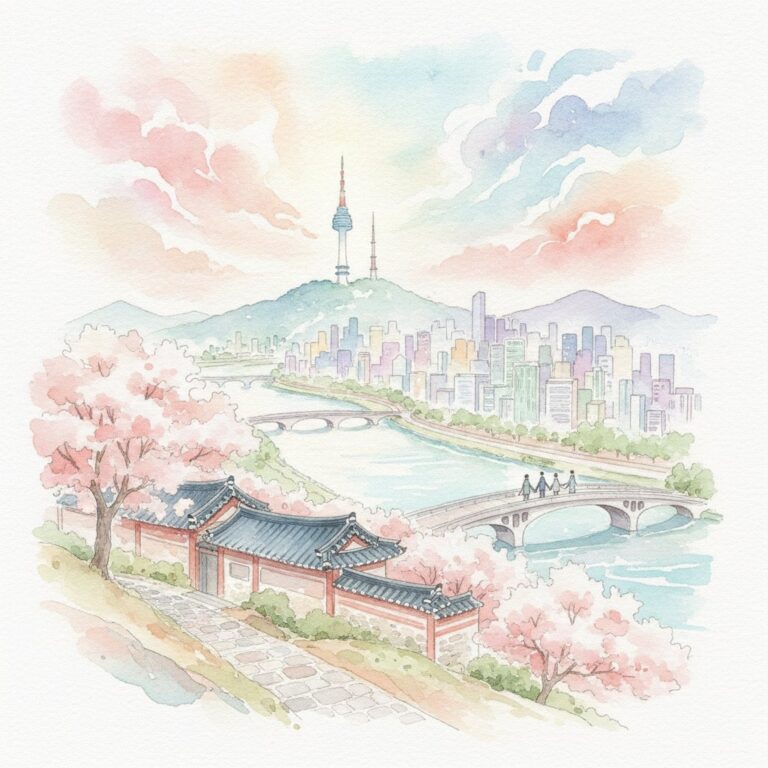
Many a K-drama couple has graced the romantic heights of Namsan Tower. While you might remember Chun Song-yi and Do Min-joon from My Love From the Star sharing a very non-snack-related meal here, or the adorable love locks of Boys Over Flowers and Hometown Cha-Cha-Cha, the journey to this iconic landmark is often accompanied by delightful street food. Imagine the crisp Seoul air as you climb, hand-in-hand with your significant other (or best travel buddy!), munching on a classic Korean street snack, just like a scene out of your favorite rom-com.
Namsan Tower, officially N Seoul Tower, is a communication and observation tower located on Namsan Mountain in central Seoul. It’s a symbol of Seoul and a popular spot for both locals and tourists, offering panoramic views of the city. While the tower itself has restaurants and cafes, the real K-drama snack experience often begins at the base or the cable car station, where vendors frequently sell hotteok, tteokbokki, and various other treats perfect for a chilly evening.
How to get there
The most common way to reach Namsan Tower is to take a subway to Myeongdong Station (Seoul Subway Line 4) and exit from Exit 3. From there, you can walk for about 10-15 minutes to the Namsan Cable Car platform, or catch the Namsan Oreumi, a free inclined elevator. Alternatively, shuttle buses run from various subway stations, including Chungmuro Station (Line 3/4) Exit 2, and Dongguk University Station (Line 3) Exit 6. Always check current bus routes and schedules before you go!
Gwangjang Market: A Feast for the Senses (and K-Drama Fans!)
If there’s one place that perfectly embodies the bustling, delicious world of K-drama street food, it’s Gwangjang Market. While Vincenzo might have only given us a fleeting glimpse, this market is practically a character in itself, appearing in countless shows as the go-to spot for authentic Korean flavors. Picture your favorite characters huddled around a small table, sharing hearty portions of traditional fare, their worries melting away with each bite. This market isn’t just a backdrop; it’s a living, breathing testament to Korea’s vibrant culinary heritage.
Gwangjang Market is one of South Korea’s oldest and largest traditional markets, established in 1905. It’s renowned for its incredible food alley, offering an overwhelming array of authentic Korean street food. Here, you can find the famous *bindaetteok* (mung bean pancakes), *mayak gimbap* (addictive mini kimbap), spicy *tteokbokki*, savory *soondae* (blood sausage), and a variety of *jeon* (savory pancakes). The experience of watching vendors prepare food right in front of you, with the aromas filling the air, is a K-drama moment come to life.
How to get there
Gwangjang Market is easily accessible by subway. Take Seoul Subway Line 1 to Jongno 5-ga Station and use Exit 8, which leads directly to the market entrance. Alternatively, you can take Seoul Subway Line 2 or 5 to Euljiro 4-ga Station and use Exit 4, then walk a short distance.
🎟️ Popular tours & experiences in Korea
Klook.comHongdae & Sinchon: University Town Delights
The lively, youthful energy of Hongdae and Sinchon makes them natural settings for K-dramas focusing on student life, first loves, and coming-of-age stories. Think of the late-night convenience store runs for instant ramen in *What’s Wrong with Secretary Kim*, or the endless fried chicken and soju nights that *Weightlifting Fairy Kim Bok-joo* made so iconic. While a specific *hotteok* scene in *Goblin* wasn’t tied to Hongdae, this area is undoubtedly one of the best places to find this sweet, chewy pancake fresh off the griddle! This is where characters truly live, laugh, and snack their way through their formative years.
Hongdae, short for Hongik University Street, and its neighboring Sinchon are vibrant districts known for their indie music scene, street art, fashion boutiques, and an incredible variety of street food stalls and cozy cafes. These areas perfectly capture the dynamic pulse of Seoul’s youth culture. You’ll find everything from classic *tteokbokki* and *odeng* (fish cakes) to trendy fusion snacks, crispy *bungeoppang* (fish-shaped pastries with sweet filling), and of course, those irresistible convenience store comfort foods that K-drama characters often share.
How to get there
To get to Hongdae, take Seoul Subway Line 2, Airport Railroad, or Gyeongui-Jungang Line to Hongik University Station and use Exit 9, which is the heart of the bustling area. For Sinchon, take Seoul Subway Line 2 to Sinchon Station, and exits like Exit 2 or 3 will place you right amidst the action.
Bukchon Hanok Village & Samcheongdong Street: Traditional Charm, Modern Snacks
Stepping into Bukchon Hanok Village feels like walking onto a historical drama set, a stark and beautiful contrast to the modern city. While not traditionally known for bustling street food stalls, the nearby Samcheongdong-gil is a picturesque street brimming with charming cafes that often put a modern twist on traditional Korean snacks and desserts. Many dramas feature scenes here – perhaps a quiet conversation over tea in a hanok cafe, or a romantic stroll where characters discover a hidden gem. Think of the serene beauty of *Goblin*’s historical flashbacks, or modern dramas exploring Seoul’s rich past, where characters find solace and connection in these timeless surroundings.
Bukchon Hanok Village is a traditional Korean village nestled between Gyeongbokgung and Changdeokgung Palaces. It’s home to hundreds of traditional houses, called *hanok*, that date back to the Joseon Dynasty. While it’s largely a residential area (please be respectful of residents!), the adjacent Samcheongdong-gil is famous for its unique blend of traditional and contemporary. Here, you can find cafes serving exquisite *patbingsu* (shaved ice with sweet red beans and toppings), traditional teas like *sujeonggwa* (cinnamon punch) and *sikhye* (sweet rice punch), and even modern pastries infused with Korean flavors, like *injeolmi* (rice cake) desserts.
How to get there
Take Seoul Subway Line 3 to Anguk Station and use Exit 2. From there, you can follow the signs to explore Bukchon Hanok Village and then make your way to Samcheongdong-gil, which branches off from the main road near the village.
Dongdaemun Design Plaza (DDP): Futuristic Vibes, Trendy Bites
For a completely different K-drama snack experience, head to the iconic Dongdaemun Design Plaza (DDP). This architectural marvel has served as a futuristic backdrop for many scenes, from fashion shows in *Record of Youth* to general shots showcasing Seoul’s modern dynamism in dramas like *Descendants of the Sun*. While not a traditional street food hub, the DDP often hosts pop-up food trucks, themed markets, and unique dessert stalls that cater to its trendy, design-savvy visitors, perfectly capturing the contemporary side of K-drama life.
Designed by world-renowned architect Zaha Hadid, the DDP is a landmark for art, design, and technology. Its sleek, curvilinear structure is a sight to behold, especially at night when it’s beautifully lit. Around the DDP, you’ll often discover various temporary food vendors, ranging from gourmet food trucks offering international fusion snacks to stalls selling popular treats like *churros*, unique ice creams, and other desserts that reflect Seoul’s ever-evolving culinary scene. It’s a great spot to grab a trendy bite while soaking in the cutting-edge architecture and vibrant atmosphere.
How to get there
The DDP is conveniently located right above Dongdaemun History & Culture Park Station, which is served by Seoul Subway Line 2, 4, and 5. Simply use Exit 1 to emerge directly into the plaza area.

Make a Day of It
To truly immerse yourself in the K-drama experience, I recommend grouping these locations and exploring their surrounding areas. Each spot offers more than just snacks; they’re gateways to Seoul’s rich culture and history.
- Namsan Tower: Combine your Namsan visit with shopping and exploring the bustling streets of Myeongdong, known for cosmetics, fashion, and more street food!
- Gwangjang Market: After feasting, take a stroll along the picturesque Cheonggyecheon Stream, visit the historic Jongmyo Shrine, or explore the expansive Dongdaemun Fashion Town right nearby.
- Hongdae/Sinchon: Indulge in some retail therapy, catch a street performance, or wander into the charming Yeonnam-dong area for its unique cafes and boutiques. Ewha Womans University is also a short walk away, offering beautiful architecture and more shopping.
- Bukchon/Samcheongdong: This area is perfectly situated between two magnificent palaces, Gyeongbokgung Palace and Changdeokgung Palace. Spend your morning exploring the palaces, then wander through Bukchon and enjoy an afternoon tea in Samcheongdong. The traditional alleyways of Insa-dong, famous for souvenirs and traditional arts, are also very close.
- DDP: As part of Dongdaemun Fashion Town, you can easily spend hours exploring the massive shopping malls, fashion outlets, and the historic Heunginjimun Gate (Dongdaemun Gate) after enjoying your trendy snacks.
Photo Tips
- Namsan Tower: For that classic K-drama shot, capture the love locks against the city skyline, especially during sunset or at night when the city lights twinkle. Don’t forget a selfie with your chosen snack!
- Gwangjang Market: Focus on the vibrant energy! Get close-ups of the food being prepared, the cheerful vendors, and the bustling crowds. A wide-angle shot down one of the food alleys can also convey the sheer scale of deliciousness.
- Hongdae/Sinchon: Capture the dynamic street art, the lively performances, and the fun, youthful atmosphere. Action shots of you enjoying a *hotteok* or *bungeoppang* are a must!
- Bukchon Hanok Village/Samcheongdong: Aim for the iconic ‘8 Views of Bukchon’ for stunning hanok rooftops. In Samcheongdong, find a quaint cafe with a traditional facade and capture your elegant dessert or tea. Golden hour (just before sunset) casts a beautiful glow.
- DDP: Play with the unique architecture – experiment with wide shots to show its scale, or close-ups to highlight its interesting textures. Night shots with the DDP lit up are particularly stunning. Capture your trendy snack with the futuristic background!
🎟️ Popular tours & experiences in Korea
Klook.comFAQ: Your K-Drama Snack Tour Questions Answered!
What’s the best way to pay for street food in Korea?
While many larger establishments and cafes in Seoul accept credit cards, traditional street food stalls often prefer cash. It’s always a good idea to carry some Korean Won (KRW) in smaller denominations for convenience. T-Money cards (rechargeable transportation cards) are also accepted at some convenience stores and larger food vendors, but cash is king for most small street food stalls.
Are vegetarian/vegan options available for K-drama snacks?
It can be a bit challenging, but not impossible! Many traditional Korean street foods, like *tteokbokki*, *odeng*, and *gimbap*, often contain fish or meat broths/ingredients. However, some *jeon* (pancakes) like *pajeon* (green onion pancake) or *bindaetteok* (mung bean pancake) can sometimes be made without meat. Look for *hotteok* (sweet pancake) or *bungeoppang* (red bean pastry) which are usually vegetarian. Always ask the vendor, often by showing a translated phrase on your phone: "고기 안돼요" (gogi an-dwaeyo – no meat) or "채식주의자입니다" (chaesikjuuija-imnida – I am vegetarian).
How much should I budget for a K-drama snack tour?
One of the best things about K-drama snacks is how affordable they are! You can easily enjoy a satisfying and diverse snack tour on a modest budget. Most individual street food items range from 2,000 to 7,000 KRW. For a full day of trying various snacks across a few locations, budgeting around 20,000 to 30,000 KRW per person should allow you to feast to your heart’s content, with some extra for drinks or a special dessert. Remember, these are approximate costs, and prices can vary by location and vendor.
More on Fan Travel Tips
- Real KDrama Cafes in SeoulA guide to real K-drama filming cafes in Seoul, including scenes filmed and transport directions.
- 4 Scenic Korean Campus K-Drama Filming SpotsGuide to four scenic South Korean university campuses featured in top K-dramas, with transit tips and nearby eats.
- Best Seasons for K-Drama Filming LocationsA guide to visiting top K-drama filming locations in Korea during their best seasons.
See every Fan Travel Tips post in our Fan Travel Tips guide.
Handy toolsK-Drama Location Finder
Keep Reading
- K-Drama Palace Locations Day Trip in Seoul
- Goblin K-Drama Travel Tips on a Seoul Budget
- Itaewon Class: Seoul Filming Locations Tour
- Solo Korea Trip: Goblin Filming Locations
🎟️ Popular tours & experiences in Korea
Klook.com